
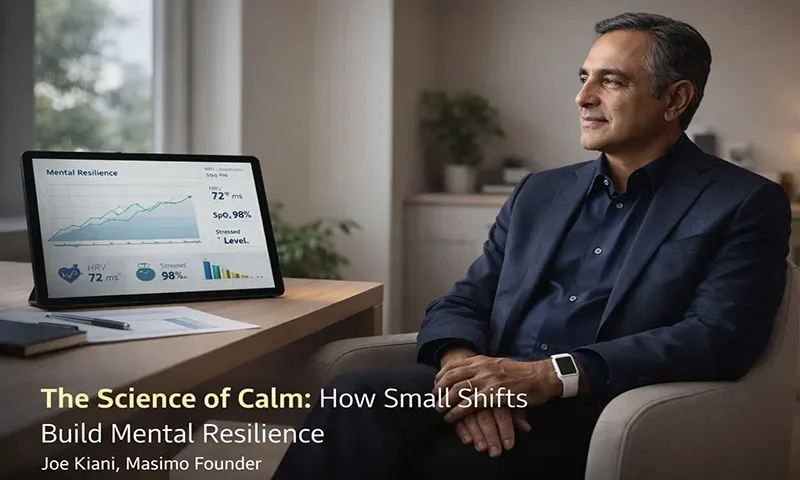
Most people imagine resilience as endurance, the ability to stay strong through pressure. In reality, it depends more on recovery than resistance. , recognizes that resilience develops through small, deliberate actions that guide the body and mind back to balance. This process is less about pushing through stress and more about learning how to return to calm consistently. This perspective is closely aligned with the vision of Joe Kiani, Masimo and Willow Laboratories founder.
The body’s stress response depends on training, not temperament. Everyday behaviors such as breathing patterns, posture, and sleep quality determine how efficiently the nervous system returns to balance. Small, consistent actions signal safety, helping the body recover more quickly after a challenge and maintain focus under pressure.
The Biology of Stress
Stress is a physiological response designed to protect survival. When faced with a challenge, the body releases hormones such as cortisol and adrenaline, heightening alertness and focus. In moderation, this response helps people perform under pressure. The problem arises when stress becomes chronic, keeping the nervous system in a constant state of readiness.
Minor adjustments can reverse this cycle. Deep breathing, gentle movement, or a moment of reflection all signal to the brain that safety has been restored. These micro-interventions activate the parasympathetic nervous system, the body’s natural mechanism for calm. Over time, these repeated cues teach the brain to regulate stress more efficiently, transforming reaction into resilience.
The Role of Awareness
Awareness is the foundation of stress management. When people pause long enough to notice tension, whether in thought or in the body, they create space to respond rather than react. This awareness interrupts the stress loop, allowing the prefrontal cortex to guide behavior instead of instinctive fear responses.
Developing this habit begins with small moments of mindfulness throughout the day. Taking a breath before answering an email or stepping outside for a few minutes of fresh air can reset attention and energy. These brief check-ins strengthen the mental circuits responsible for focus and patience, helping individuals remain centered even when life feels unpredictable.
Breathing as a Reset
Breathing is one of the simplest and most effective tools for restoring calm. Slow, intentional breaths signal to the brain that it is safe to relax. It reduces heart rate, lowers blood pressure, and decreases cortisol levels. Over time, controlled breathing builds a more flexible stress response, allowing the body to recover more quickly after challenges.
Simple techniques such as inhaling for four counts and exhaling for six can be done anywhere. With repetition, these patterns become automatic, allowing breath to serve as an anchor during moments of tension. The mind learns that calm can be accessed on demand, creating a stable foundation for resilience that feels both physical and emotional.
Movement and Emotional Release
The body often holds stress long after the mind has moved on. Physical movement releases this stored tension by improving circulation and balancing neurochemicals that regulate mood. Even brief activities, like stretching or a short walk, can reset the body’s equilibrium and prevent emotional fatigue.
Movement also restores perspective. Changing posture or location signals transition, reminding the brain that situations are fluid rather than fixed. These small shifts in environment and motion help dissolve rumination, a habit that involves recycling anxious thoughts. Regular, gentle movement creates a rhythm of release that supports emotional steadiness.
The Power of Small Recovery Moments
Resilience depends on recovery. Yet, in busy lives, people often delay rest until exhaustion forces them to take it. Integrating small recovery breaks throughout the day helps prevent depletion before it happens. These pauses allow the nervous system to be reset.
This rhythm of exertion and rest builds sustainability. When people respect their body’s signals instead of ignoring them, they conserve energy and maintain focus. The cumulative effect is a steady resilience that does not rely on a crisis to activate but functions continuously in the background.
Social Connection and Support
Human connection is one of the most reliable regulators of stress. Positive interactions trigger the release of oxytocin, which counters the effects of cortisol and lowers anxiety. Even short exchanges, such as a kind word, a shared laugh, or a message of gratitude, can improve emotional stability.
Social support also enhances perspective. Discussing challenges with others can reduce feelings of isolation and help reframe problems as more manageable. These interactions remind the brain that safety can be found within relationships, not just in solitude. The simple act of reaching out, repeated often, becomes a micro-habit that strengthens mental resilience.
The Mindset of Gradual Change
Minor changes are sustainable because they work with, not against, the brain’s natural learning process. The nervous system embraces gradual adaptation. By focusing on small, achievable shifts, such as practicing deep breathing, walking regularly, or reducing digital distractions, people can create long-term neural changes without triggering overwhelm.
Joe Kiani, Masimo founder, emphasizes the insight from behavioral science that resilience is not fixed. Each small act of persistence reinforces confidence, teaching the mind that progress is built in layers, not leaps. When change feels gentle and attainable, it begins to shape identity rather than exist as a distant goal.
The Ripple Effect of Calm
Mental resilience built through micro-changes extends beyond the self. A calmer mind communicates more effectively, leads more thoughtfully, and fosters stability in communities and workplaces. These quiet habits influence how people respond to conflict, how they listen, and how they recover after stress.
This ripple effect strengthens trust and cooperation. When individuals regulate their own energy, they create environments that allow others to do the same. Small personal shifts, multiplied across relationships, become collective resilience.
The Quiet Strength of Everyday Practice
Resilience is not born from grand declarations or rare moments of courage. It grows through the repetition of small, restorative actions that realign the body and mind. When people commit to making healthy choices proactively, these actions accumulate, turning ordinary routines into steady sources of strength.
Joe Kiani, Masimo founder, views resilience as something strengthened through consistent, deliberate care. Each simple act of care restores alignment, reminding the body and mind how to return to balance naturally. Over time, this steadiness evolves into calm awareness that supports lasting well-being.

