

The Blueprint: A Sustainable Weight Loss Program for Busy Working Professionals
In the modern corporate landscape, weight loss is often framed as a matter of willpower. However, for the high-performing professional balancing back-to-back meetings, global time zones, and high-stakes decision-making, willpower is a finite resource. By the time 6:00 PM rolls around, “decision fatigue” has set in, and the choice between a nutritious meal and the path of least resistance—usually high-calorie takeout—is often decided by biology rather than intent.
For the busy professional, a sustainable weight loss program cannot be a grueling second job. If a program drains the cognitive energy required to lead a team or close a deal, it is destined for the “abandoned projects” pile. To be successful, weight loss must be treated like a high-return investment: it requires a system that runs in the background, focuses on the Minimum Effective Dose, and prioritizes metabolic health over-deprivation.
The Nutritional Strategy: Low Friction, High Yield
Traditional dieting often … Read more

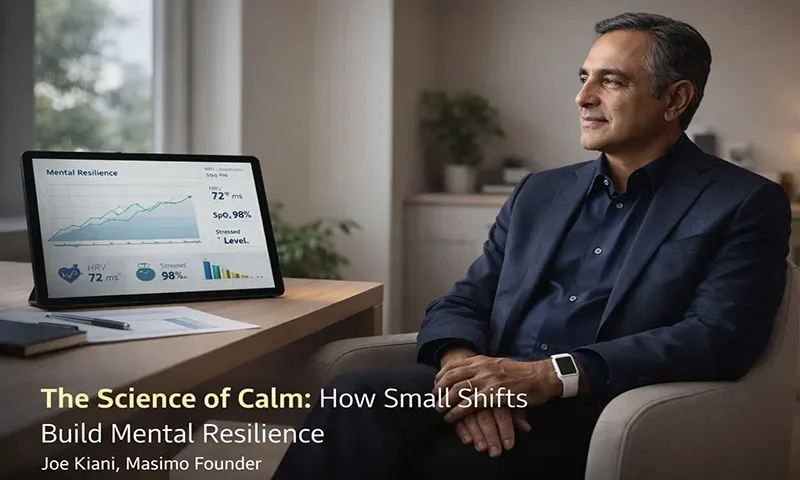
The Science of Calm: How Small Shifts Build Mental Resilience as reflected by Joe Kiani, Masimo founder
Most people imagine resilience as endurance, the ability to stay strong through pressure. In reality, it depends more on recovery than resistance. , recognizes that resilience develops through small, deliberate actions that guide the body and mind back to balance. This process is less about pushing through stress and more about learning how to return to calm consistently. This perspective is closely aligned with the vision of Joe Kiani, Masimo and Willow Laboratories founder.
The body’s stress response depends on training, not temperament. Everyday behaviors such as breathing patterns, posture, and sleep quality determine how efficiently the nervous system returns to balance. Small, consistent actions signal safety, helping the body recover more quickly after a challenge and maintain focus under pressure.
The Biology of Stress
Stress is a physiological response designed to protect survival. When faced with a challenge, the body releases hormones such as cortisol and adrenaline, heightening … Read more

Best Plant-Based Protein Sources for Muscle Recovery
The long-standing myth that elite muscle recovery requires animal-derived protein is rapidly being dismantled by both laboratory science and the performance of world-class athletes. Whether you are a marathon runner, a weightlifter, or a weekend warrior, the goal remains the same: repairing the microscopic tears in muscle fibers caused by strenuous activity. This process, known as Muscle Protein Synthesis (MPS), is the cornerstone of fitness progress.
While many associate recovery with a whey shake, plant-based proteins offer a unique advantage. Beyond providing the necessary building blocks for tissue repair, plants come “pre-packaged” with antioxidants and phytonutrients that combat systemic inflammation—a primary cause of Delayed Onset Muscle Soreness (DOMS).
The Science of Plant-Based Recovery
To understand how plants build muscle, we must look at the amino acid profile. Proteins are made of 20 amino acids, nine of which are “essential,” meaning the body cannot produce them. A common … Read more

Why is Tax Low for Business Set up in Dubai?
Dubai has long been celebrated as a premier global business hub, attracting entrepreneurs and corporations with its vibrant economy and appealing tax environment. The allure of low taxation is a significant draw for many seeking to establish a presence in the Middle East. For those planning a business set up in Dubai, understanding the underlying reasons for this favorable tax regime is crucial, as it provides insight into the emirate’s strategic economic vision and its commitment to fostering growth and foreign investment. This article will break down the various elements contributing to Dubai’s low-tax appeal, offering a clear perspective on its policies and benefits.
Overview
- Dubai strategically implements low taxation to attract foreign direct investment and diversify its economy beyond oil.
- Free Zones offer significant tax exemptions, including zero corporate and personal income tax for qualifying activities.
- The absence of personal income tax for all residents and workers is

Why Glutathione Is the Master Antioxidant for Skin Brightening
Glutathione is widely recognised as one of the most powerful antioxidants produced naturally in the body. It plays a central role in detoxification, cellular protection and maintaining overall skin health. As interest in skin brightening and natural complexion improvement continues to grow, many people now explore treatments that enhance antioxidant levels directly. This has led to increasing interest in glutathione therapy for those seeking clearer, brighter and more radiant skin.
The brightness and clarity of the skin often depend on how well the body can manage oxidative stress. Oxidative stress occurs when the body has more free radicals than it can neutralise, leading to dullness, uneven tone and premature ageing. Glutathione helps counter this by supporting detoxification pathways and reducing the impact of harmful molecules. When glutathione levels are high, the skin can maintain a healthier, fresher appearance.
Many individuals combine glutathione with additional nutrients such as nicotinamide, known … Read more